An excellent entrance earns its maintain prior to you hang the initial coat. It reduces the weather condition at the threshold, arranges the daily shuffle of secrets and bags, and establishes the tone for every little thing past. When it falls short, you feel it instantly: puddles sneaking across floorings, a jumble of shoes, a door that smacks a console table, that missing out on glove when you are already late. Done well, the room lightens choreography. You cross the limit, set things down without assuming, and proceed. That smooth handoff is the goal.
I have created and redesigned entrances in homes, historical townhouses, new-build homes, and a couple of retail spaces with penalizing foot website traffic. The concepts hold across square video footage and budgets, however the trade-offs change. A compact city foyer needs millimeter-level planning, while a sprawling rural mudroom asks for zoning, resilience, and restraint. What complies with is practical assistance based in fieldwork: dimensions that matter, materials that endure, storage space that behaves, and the little details that make an entranceway work day after day.
Start with honest traffic mapping
Before selecting a mirror or a paint color, track how the space is made use of for a week. View the course from the door to the remainder of the home. See where individuals naturally drop bags and begin shoes. Note which door you in fact make use of daily, not the official front. If a side entryway takes care of 80 percent of comings and goings, that is your functional entryway, also if the front hall is larger.
I illustration a straightforward representation over a gauged plan. Mark swing arcs of doors, the footprint of open and closing activities, and the flow course right into adjacent rooms. A typical exterior door needs a clear swing of roughly 36 inches throughout its width, plus comfy clearance beyond the arc so you do not pin yourself against furniture. If a door opens up internal towards a tight wall, shallow storage space ends up being required. In older houses with narrow vestibules, taking tornado doors or reversing the swing can make or break use, however check codes and climate exposure before changing.
Children and family pets modify the map. A five-year-old declines a knapsack within two actions of the limit. A Labrador shakes off snow right where you least desire it. Layout for these sincere behaviors instead of a best-intentions situation that will never ever survive a Tuesday morning.
Choose a pecking order: what takes place first, second, third
The entranceway need to organize little routines in sequence. Key decrease, layer off, footwear saved, mail sorted, fast mirror check, lights on or off. Force these to happen in intuitive order along your path. The initial landing target within arm's reach of the door need to be a long lasting surface for tricks and phone. Hooks needs to come before wall mounts for rate. Shoes need an open rack at ankle joint elevation to prevent an overdo the flooring. The mirror belongs after storage space, not before, so you are not stepping around outerwear to readjust a collar.
When area enables, I zone by feature: wet zone simply inside the door with a floor covering and umbrella stand; transition zone where outerwear lives; tidy area where you check the mirror and order essentials. In a small apartment this all presses right into an eight-foot stretch, however the series still holds.
Storage that acts under real pressure
Storage is the foundation. A sleek bench implies absolutely nothing if it conceals a void that gathers dirt bunnies and lost mittens. Start with capacity needs throughout periods, then select styles that fit your habits.
Coats and coats: If you use heavy outerwear 4 months of the year, you likely need 20 to 26 inches of rod per frequent individual to stay clear of packing. In limited spaces, a dual row of staggered hooks utilizes vertical wall area more efficiently than a brief wardrobe, and it trains youngsters to hang their own points. If you do have a closet, hang poles at 66 inches for adult coats and include a 2nd reduced pole at 40 to 44 inches for kids's items or shorter jackets.
Shoes: Shut cupboards conceal aesthetic clutter, yet they also hide dampness and smell. I like open shelves with a 7 to 8 inch upright clear per tier for footwear, 10 to 12 inches for boots. Usage slatted or perforated steel for air movement. If you insist on doors, include vented panels and a cleanable tray beneath. For families with kids, angled footwear trays at floor degree defeated cubbies because children can throw shoes in without alignment.
Bags and knapsacks: Deep hooks set 12 inches apart avoid jostling. If bags are hefty with laptop computers, install hooks to blocking, not drywall supports. A 4 to 6 inch deep open cubby over the bench committed to mail and tiny products keeps the surface clear.
Keys and small basics: A slim wall-mounted shelf, 3 to 4 inches deep, sits within one step of the door. Include a shallow lip to avoid phones from moving. A meal for coins and a small tray for sunglasses suffice. Stay clear of deep cabinets that end up being junk graves.
Mail: If you process mail at the entry, a slim two-slot wall surface file over counter elevation divides incoming from outgoing. If you take care of mail in other places, do not develop a second sorting station you will never maintain.
Umbrellas: A heavy stand with a drip tray near the damp area conserves floor covering and dries gear quicker. In snowy environments, a pull-out boot tray under a bench with a shallow pitch towards a detachable mat prevents puddle creep.
The bench is not optional
I have lost matter of times a bench fixed 3 issues simultaneously. It provides a refuge to sit while placing on shoes, adds a horizontal surface area for bags, and hides beneficial storage space below. The very best bench height for connecting footwear is 17 to 19 inches. Depth needs to not exceed 16 inches in narrow halls or you risk blocking the passage. If your access is limited, a wall-mounted flip-down perch can replace. In a mudroom, a bench with 3 or four bays below offers trays for footwear and bins for headscarfs and gloves.
If you ever before host older visitors, a bench comes to be a standard ease of access feature. It likewise transforms the daily speed. The act of resting signals shift, and the clutter that usually gathers on the flooring moves onto the bench for a faster tidy.
Light like a small phase set
Most entrances do not have natural light. The fix is not one intense ceiling fixture. You want layered lighting that appreciates various settings: bright and even in the morning rush, soft and welcoming during the night, crisp near a mirror for a last check.
A flush or semi-flush main fixture provides general light without drop height concerns. Go for 20 to 30 lumens per square foot for task-ready illumination, then dim to 10 to 15 lumens for evening. Add a sconce or 2 at face elevation next to the mirror to stay clear of shadowy raccoon eyes. If there is a closet, put it by itself button with a door-jamb actuator so it switches on automatically when opened up. For a long hall, a little recessed place targeted at artwork adds deepness without glare.
Color temperature matters. A 2700 to 3000 Kelvin array checks out warm without straying orange. Placed everything on dimmers. The little expense gives you manage over state of mind, which assists a home feel purposefully lit rather than just illuminated.
Flooring that can take a hit
The flooring at the limit lives a difficult life. It fulfills wet boots, grit, salt, and sun. Layout the first 3 to 5 feet as a sacrificial zone. A firmly woven indoor-outdoor floor covering with a rubber backing catches grit prior to it reaches delicate surface areas. In wet or snowy environments, use a water-dam style floor covering that holds a quart or more. Past the mat, pick products that will not betray you after one winter.
Porcelain ceramic tile is my go-to for toughness, discolor resistance, and simplicity of cleansing. Utilize a floor tile with appearance or a matte surface; anything as well smooth becomes an invitation to slip. Large format tile lessens grout lines where dust collects. If your home has timber floors going through, a floor tile inlay at the door can look deliberate when trimmed with a flush metal strip. If you proceed timber, choose a species and surface that endures moisture better, such as white oak with a high-solids oil surface, and devote to a real mat terminal. Stay clear of hollow vinyl mats in high sun locations; they can yellow the flooring underneath over time.
Radiant warmth is a luxury that pays rewards in mudrooms. It dries pools faster and minimizes stuffy scents. If that is not in the budget plan, put a boot tray on a slatted riser to allow air circulation beneath.
Wall finishes that make it through bags and paws
Walls take misuse from straps, sides of boxes, and ecstatic tails. Repaint with a scrubbable coating ranked for frequent cleaning. Some brands classify this as cleanable matte, satin, or eggshell with high scrub resistance. Avoid true flat finishes in this zone; they burnish under cleansing and show marks. Beadboard or vertical panels to a 36 or 48 inch wainscot give a hardwearing surface where scuffs concentrate. In contemporary spaces, a painted MDF panel supplies the same defense without a cottage look.
If you are lured by wallpaper, choose a vinyl-coated or performance paper that wipes tidy. Install it over a durable wainscot to maintain it out of straight contact with footwear and damp apparel. Entryways see slim misses out on from bags, and a fragile grasscloth will certainly snag on day two.
Work with the door, not versus it
The door becomes part of the interior decoration, not just hardware. If your access is dark, a door with a half-light or full-light pane can change the space. Select double or triple glazing for insulation and privacy glass if you deal with an active street. A full-view storm door with a display provides seasonal versatility, allowing you draw in breezes without welcoming bugs.
Hardware selection matters as much as design. Lever handles are less complicated to use with complete hands and for people with minimal hold strength. If you set up a clever deadbolt, validate battery accessibility and difficult essential back-up. Mount a strong doorstop or an overhanging quit so the handle does not punch the wall surface when flung open. In tight entrances, a spring-loaded hinge can protect against the door from drifting open and obstructing circulation.
Weatherstripping and threshold fit are not decorative, yet they influence convenience and maintenance. A properly secured door keeps drafts down and decreases dirt. That implies less grit tracked in and longer life for floorings and rugs. If you listen to whistling on gusty days, you are losing both warmth and patience.
Mirrors, artwork, and personality without clutter
The entryway ought to show the household's personality, not look like a hotel passage. Still, individuality needs to gain its area. A mirror is the one piece that blends feature snappy. Hang it at eye degree for the shortest home participants who will use it frequently. Round mirrors soften angular corridors, while tall slim mirrors intensify upright space. If the mirror sits across from the door, be mindful of what it shows to passersby.
Artwork sets tone swiftly. I like a solitary strong piece near the clean area as opposed to a gallery wall surface that stresses the eye in a tiny room. If the access is long, a set of prints produces rhythm down the hall. Choose frames with sturdy finishes; the occasional bag or sleeve will clean them.
Plants are complicated. They bring life, however entryways frequently turn from chilly to warm, dark to brilliant, depending on season and door usage. If you desire plant, use durable types like ZZ plants or sansevieria, placed past the damp area. A tiny branch in water on a console can be exchanged weekly, adding freshness without commitment.
The tiny table that earns its keep
A console table looks like a must, yet in several homes it crowds the room. If you can spare 10 to 12 inches of deepness and keep clear flow of at the very least 36 inches, a slim console jobs. house painters chicago Prioritize one drawer for spare tricks and batteries, and keep the top virtually empty so it serves as a landing zone as opposed to a screen rack. If you constantly end up with clutter, change tactics: a wall-mounted slim shelf or a drifting closet projects less bulk and invites much less accumulation.
For really little entrances, a corner shelf at 42 inches high can hold tricks without intruding. Remember that any type of straight surface invites down payments. Design the quantity of surface areas to match your tolerance for tidying.
Sound, scent, and the sensory welcome
This is the neglected layer. A rug softens footfall and decreases resemble in a hard-surfaced entry. Felt pads under furnishings keep scuffing noises down. If you take pleasure in a subtle fragrance, find a diffuser or candle light away from the damp area and straight sun; warm intensifies fragrance quickly, which can bewilder a small area. Use restraint right here. The nose adapts, yet visitors do not.
Doorbells and chimes matter also. If you are changing them, choose a tone that does not container the access's state of mind. It is a tiny detail with unusual influence on how a home feels when site visitors arrive.
Mudroom scale: when the entrance comes to be a workhorse
In homes with a devoted mudroom, the design brief shifts from rather change to day-to-day engine area. Water resistance, volume, and clear labeling come to be the vehicle drivers. Assume like a back-of-house manager.
Floor to ceiling kitchen cabinetry deals with seasonal overflow, but stay clear of deep great voids. Maintain most cupboards 12 to 16 inches deep for simple gain access to, reserve much deeper 20 to 24 inch systems for cumbersome equipment or a concealed washing terminal. Install a counter at 34 to 36 inches as a staging location for grocery stores and packages. Peg rails along a full wall accommodate altering needs, from drying out beach towels to hanging Halloween costumes.
If you have the space, include an utility sink with a sprayer at 34 inches high, paired with a hose-ready faucet. It will consistently conserve your cooking area sink from paintbrush cleanups and sloppy paws. An integrated pet laundry at knee elevation sounds indulgent, yet if you live near routes or have a huge type, it repays in less mess and less backaches. Air flow in mudrooms is vital. An exhaust fan on a humidity sensing unit aids dry gear and keep smells in check.
Apartment entries: micro relocations with macro impact
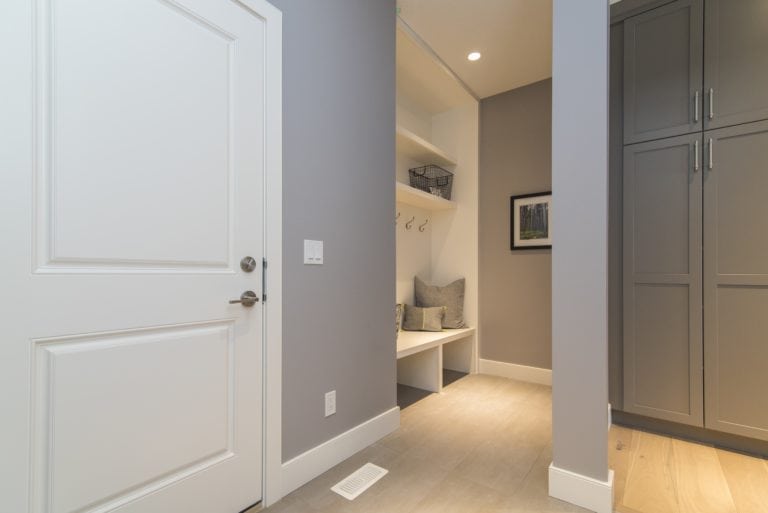
Urban entries commonly gauge much more in inches than feet. The key is keeping every little thing flush and slim. A footwear cupboard with turning areas in a 7 inch depth can hold a surprising variety of pairs. Pair it with a slim step atop for keys. Swap a turning storage room door for a sliding barn-style door if code and layout authorization; it frees the swing area for a little bench.
Use vertical space strongly. A row of hooks at 68 inches for grownups, and a second row at 44 inches for youngsters, increases capacity without trespassing on floor area. Mirrors need to be proportional, not large; in tight spaces a massive mirror can generate aesthetic noise. Lighting is your ally below. An intense central component paired with a compact sconce near the mirror builds depth without taking in priceless inches.
In rental situations where you can not pierce, make use of high-holding-capacity sticky hooks ranked for at least 10 extra pounds, and a freestanding coat tree with a weighted base. An attractive rolling cart can act as a turning seasonal terminal: hats and gloves in winter, coastline equipment in summer, cleansing materials hid during hosting.
Safety and accessibility from the start
Function includes security. Entries require clear passagewide sufficient for wheelchair tools and strollers. Aim for 36 inches minimal clear size; more is better. If you have a step at the limit, add a contrasting strip at the side to prevent journeys, and guarantee your mat does not create a lip that captures footwear or wheels. For families with a participant using a pedestrian or walking stick, swap slim scatter rugs for a solitary inconspicuous, beveled-edge mat that can not move easily.
Handholds aid everybody. A sturdy hook rail or a discretely placed grab bar near the bench can pass as a towel bar aesthetically while supplying actual assistance. Bar deals with, as kept in mind, are less complicated to run. If you have clever lighting, established an entry scene on a motion sensor with a fade-up to prevent surprising anyone strolling in at night.
Color that forgives and welcomes
Light colors make limited spaces really feel bigger, however pure white in an entry shows scuffs instantaneously. Off-whites with a decline of grey, greige, or lotion are much more forgiving. Mid-tones like sage, pale jeans, or clay produce warmth and conceal marks. If you yearn for drama, paint the door a saturated color and maintain surrounding walls calmer. Dark ceilings can include intimacy in tall entrances, but make certain lighting degrees can compensate on grey days.
Trim and millwork typically take most of abuse. A a little darker trim than walls aids the eye read edges and makes little nicks much less evident. If you paint a wainscot or paneling, a semi-gloss will withstand cleaning up much better than eggshell.
Editing: what to leave out
Restraint is a layout device. I have actually seen entrances suffocated by good intents: multiple little hooks at random elevations, a congested console, a too-large rug that crinkles at sides, seasonal design layered until the space resembles a storage system. If an item has no clear job, it does not belong at the threshold. One mirror, not three. A solitary catch-all tray, not a lineup of bowls. A bench plus a hook rail resolves more than a console plus a chair plus a plant stand.
Evaluate every three months. If a hook is never ever utilized, move it or eliminate it. If the mail slot draws in clutter, move it out of the access. Layout needs to adjust, not ossify.
Budget strategies that still look polished
You can accomplish a functional access without custom-made cabinets. Emphasis spending on surface areas and equipment that see continuous usage. Upgrade the mat and floor first. Set up solid hooks anchored into studs. Get a bench with real wood or sturdy metal framing rather than a flimsy decorative piece.
If customized built-ins run out reach, put together a modular system. Combine a prefabricated bench, a wall-mounted rack with integrated hooks, and a high footwear closet. Paint the wall behind in an unified shade so the items review as a single composition. Invest in illumination next; a high-grade flush mount and a dimmer elevate everything. Lastly, include one individual, sturdy accent that indicates home: a mounted textile, a classic rug runner in excellent problem, or a declaration mirror.
A simple, high-impact configuration for most homes
- A cleanable, high-capacity mat spanning the door size, coupled with a slatted boot tray established on the bench side of the mat. A 48 to 60 inch bench at 18 inches high with two or three open bays beneath for footwear and baskets. A row of five to 7 sturdy hooks installed right into obstructing at 68 inches high, plus two or 3 reduced hooks at 44 inches for kids. A round mirror between 24 and 36 inches throughout centered above the bench, with a dimmable sconce on either side if space allows. A narrow rack or drifting drawer within one step of the threshold for secrets, with a tiny tray and a wall surface apply for outward bound mail.
This mix fits along an 8 to 10 foot wall surface in numerous homes and fixes 80 percent of access pain points.
Common pitfalls and how to stay clear of them
- Overly deep furnishings that tightens passage. Action from door swing arc, not simply wall surface to wall surface, and cap deepness at what your space allows. Hooks without appropriate backing. Drywall anchors stop working under everyday lots. Include blocking behind walls during a renovation, or align hooks to studs. Too little lighting control. One intense fixture produces glow during the night. Use split lights on dimmers and stay clear of bare bulbs at eye level. Beautiful however not practical rugs. High-pile fibers catch grit, hold moisture, and curl. Select low-pile, bound edges, or indoor-outdoor weaves. Storage that conceals moisture. Closed shoe cupboards without airing vent welcome scent and mold. Integrate in airflow.
Bringing it together
When an entranceway functions, you quit thinking of it. That is the mark of great interior design in utility rooms: the style leaves your way. You relocate, drop what you need to go down, store what you require to save, and progression lighter. Attaining that simplicity takes calculated selections, straightforward measurements, and a rejection to allow design outrun use.
Start with the sequence of activities. Offer each one a home, and make the homes convenient without bending. Select products that forgive the weather condition and time. Install a bench, even a little one. Light the area like you respect faces. Mount hooks like you expect a winter. Modify till only the valuable and the significant continue to be. After that add a touch that seems like you, due to the fact that functionality and welcome belong with each other at the first step inside.
OnDemand Painters 2333 N Southport Ave Apartment 1, Chicago, IL 60614 +13126380560 http://www.ondemandpainters.com/